Intense debate on a landmark designation for Boston’s Citgo sign continued at last weeks Boston Landmarks Commission meeting
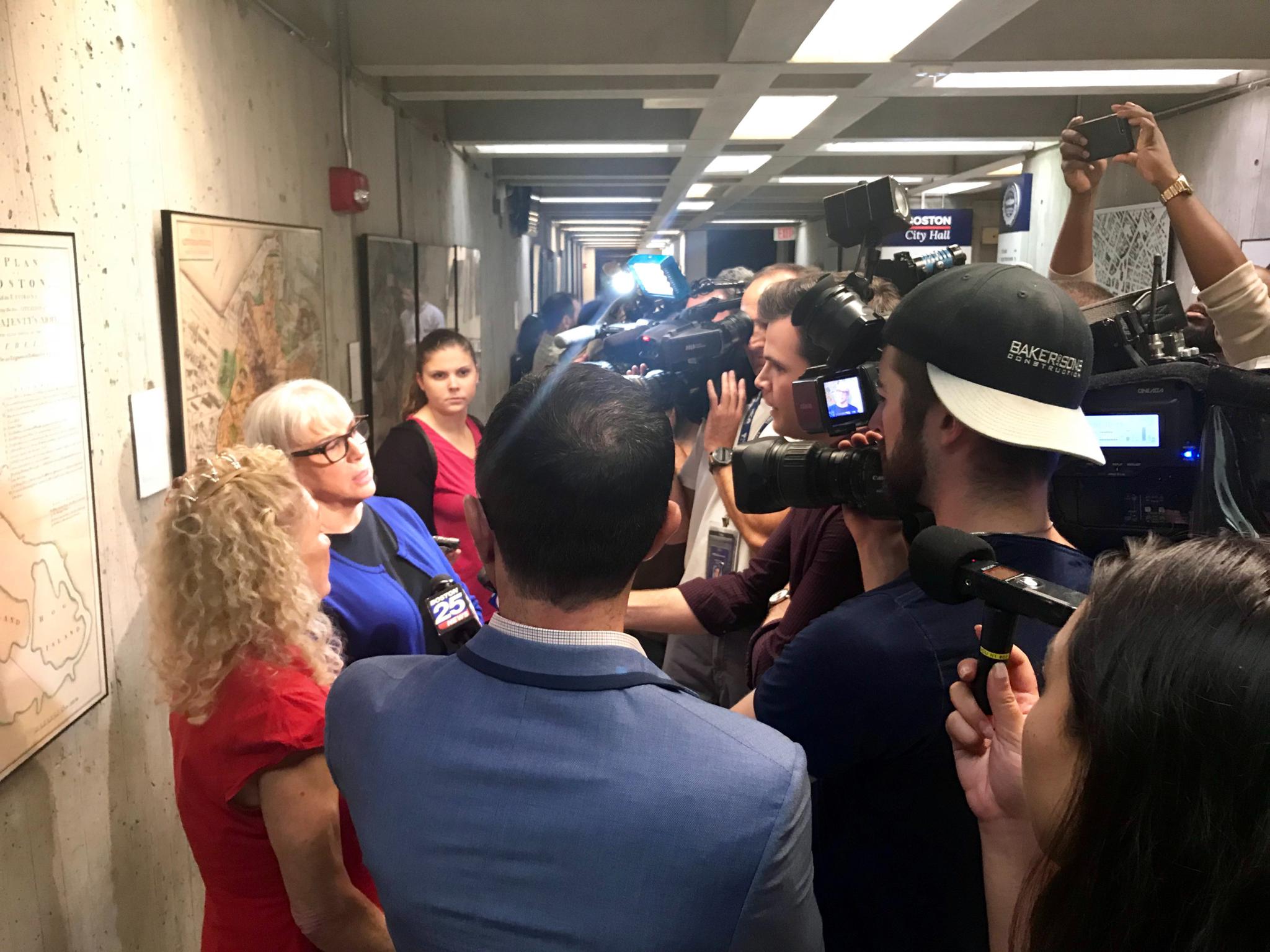
A Kenmore Square business leader told the Boston Landmarks Commission last week that a landmark designation for the iconic Citgo sign would prevent the community from pursuing its future plans for redevelopment.
“We’ve worked very hard to stabilize Kenmore Square through some very difficult times,” said Pam Beale, head of the Kenmore Square Business Association. “Always with the hope that this would remain an active area for redevelopment.” Residents of Kenmore Square expressed concern that a landmark designation would restrict the community from constructing buildings that may obstruct the sign.
Related Beal, a Boston real estate firm, purchased 660 Beacon St. from Boston University in 2016. The firm has continued to lease the building’s roof space to Citgo, where the 60-foot-by-60-foot LED sign sits. Leaders at Related Beal do not want a landmark designation for the Citgo sign because it will complicate long-established commercial relationships.
“The Citgo sign is first and foremost an ad,” said Thomas Brown, a lawyer for Related Beal.
While Brown said that Related Beal is committed to work with the city, he added that a landmark designation would create legal issues. If Citgo goes out of business, Related Beal would still have to keep the sign in the air. “To require it to stay in place, under any conditions, requires the owner of the building, Related Beal, to engage in commercial speech if Citgo falls out of the picture,” said Brown. “That’s a problem under the First Amendment.”
Citgo, which is owned by the Venezuelan government, pays for the sign to sit on the roof. Kenmore Square said they fear that a landmark designation would push the maintenance costs of the sign onto the community and would provide free advertising for a financially unstable country.
Terri North, president of the Kenmore Residents Group, starts and ends her days looking at the Citgo sign. She said a landmark designation would force maintenance costs onto the taxpayers. “If the commission votes to do so, this asset of a foreign country will have free advertising in the Boston skyline,” said North. “The cost will fall to the city and taxpayers of the commonwealth.”
Alex Davis, a lawyer representing Boston University, said the sign is a valuable commercial advertisement for Citgo, and that a landmark designation to keep the sign in place is not necessary. He urged the Boston Landmarks Commission to pause the designation process. “In the foreseeable future it will continue to be paid for by commercial interests,” he said. “There is no reason to believe that they won’t continue taking care of their sign.”
Reached after the hearing, Greg Galer, the executive director for the Boston Preservation Alliance, said that the sign represents a connection to home. The Boston Preservation Alliance, a nonprofit organization, works to protect the architectural heritage of Boston. “There is this odd emotional attachment to the sign,” said Galer. “It’s as much a landmark as any way people can think about it.”
Galer said that a vast majority of Bostonians want the sign protected. It can be seen from Fenway Park, and is a motivational marker for runners of the Boston Marathon as they approach their last mile. The sign has been tattooed on people, and is found on T-shirts, keychains and other merchandise sold throughout Boston.
The Landmarks Commission reviewed a 51-page study report on the Citgo sign, but will not vote on its landmark designation until later.
But Pam Beale said she does not want the landmark designation to ruin the positive relationship that Related Beal has established with the Kenmore Square community. She said that since the firm acquired buildings in 2016, they were “willing to listen to and work with the community to design buildings that met our needs and respected the Citgo sign.”
Beale is concerned that a landmark designation would “create some form of a protection area around the sign,” prohibiting other offices or buildings from being developed in the area.
Erika Tarlin, who grew up across the river from Kenmore Square, was reached after the hearing and said that someone should speak on behalf of the sign itself. “It’s moved beyond representing Citgo or Venezuela oil,” said Tarlin. “I’m sorry for those who think that a sign could possibly topple commercial endeavors.”
Galer said he is still amazed that the sign can be seen from so many places in the city.
“It’s a quick image that immediately says where you are and where you’ll be directed to,” said Galer. “To them it represents a connection to their home, a point of navigation, and a symbol of Boston.”
